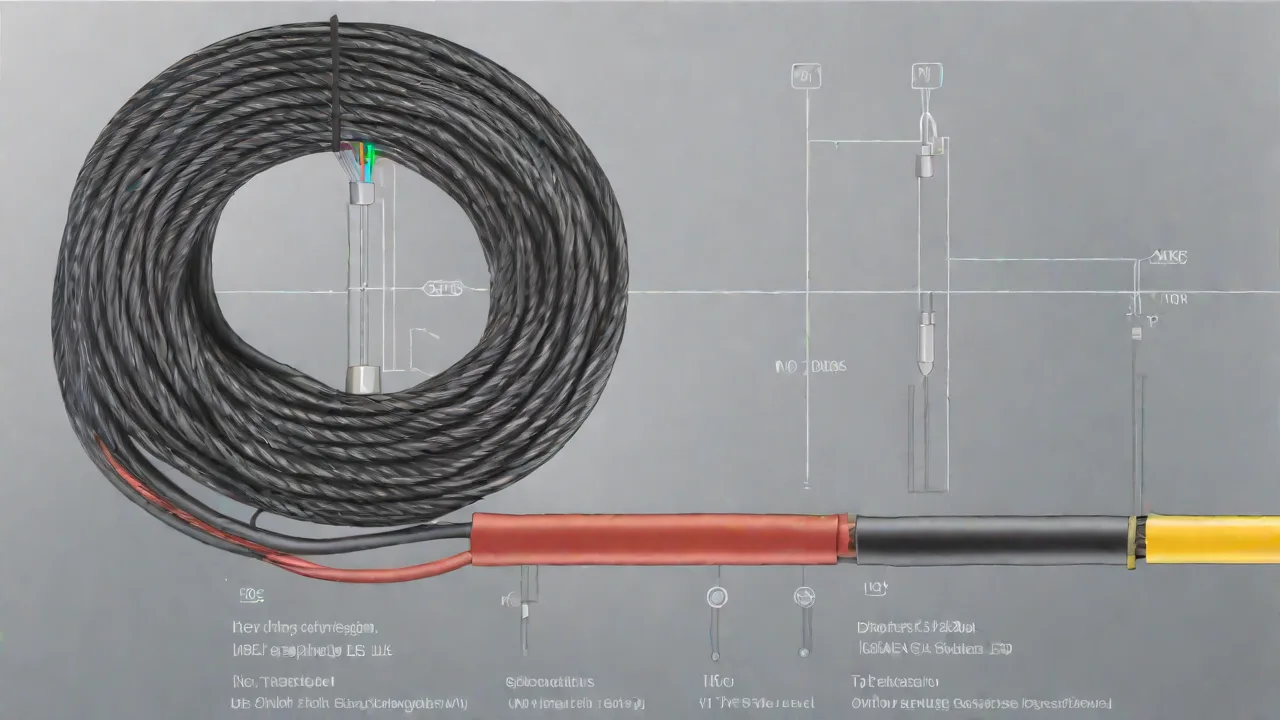
Understanding the Mechanical and Electrical Specifications of Ts Cables
Selecting the wrong TS cable for a demanding industrial environment or precision electronic system can lead to costly downtime, signal degradation, or outright safety hazards. Engineers and technicians must conduct a rigorous evaluation of both mechanical and electrical specifications to guarantee system reliability. TS cables—commonly defined as Tinned Copper or Technical Specification cables—are engineered assemblies of conductors, insulation, shielding, and jacketing designed for specific operational conditions. This guide provides an in-depth breakdown of these essential parameters, offering a practical framework for making informed cable choices. It covers conductor stranding, insulation chemistry, voltage and current ratings, signal integrity factors, and the certifications that validate performance.
Mechanical Specifications: Designing for Longevity and Harsh Environments
The mechanical attributes of a TS cable determine its capacity to withstand the physical stresses of installation, operation, and environmental exposure. These specifications are often the primary consideration for applications in industrial automation, outdoor energy systems, and transportation. A cable must be mechanically robust enough to survive pulling through conduits, constant flexing in cable carriers, or exposure to chemicals and extreme temperatures.
Conductor Materials and Plating
While copper is the standard for its high conductivity, the precise alloy and coating of the conductor significantly impact performance and durability.
- Bare Copper: Offers optimal conductivity but is susceptible to oxidation and corrosion over time, especially in humid or acidic environments. It is best suited for indoor, conditioned spaces.
- Tinned Copper: Each strand is coated with a thin layer of tin, providing superior corrosion resistance and easier soldering. This is a defining characteristic of many TS cables used in marine, automotive, and solar applications. The tin layer acts as a barrier against corrosion and improves long-term reliability.
- Silver-Plated Copper: Used in high-temperature and high-frequency applications where surface conductivity is critical. Silver plating reduces signal loss at high frequencies (skin effect) and allows for higher operating temperatures.
- Copper-Clad Aluminum (CCA): A composite conductor using an aluminum core with a copper cladding. CCA cables are lighter and cheaper than pure copper, making them attractive for specific weight-sensitive data applications. However, engineers must account for the higher DC resistance and reduced torque strength of CCA compared to solid copper. For power applications requiring high ampacity, CCA is generally not recommended due to its lower conductivity and higher voltage drop.
Stranding Configurations: Determining Flexibility and Stability
The stranding class defines the number and thickness of individual wires within the conductor. This directly affects the cable's flexibility, fatigue life, and termination method.
- Class 1 (Solid): A single, solid wire. It is rigid and suitable only for permanent, static installations where no movement occurs after termination.
- Class 2 (Standard Stranded): Composed of a few relatively thick strands. Offers moderate flexibility and is common in fixed industrial power wiring.
- Class 5 (Fine Stranded): Made of many thin strands, providing high flexibility. This is the standard for portable tools, pendant stations, and applications requiring occasional flexing.
- Class 6 (Extra-Fine Stranded): Contains a very high number of ultra-thin strands, delivering maximum flexibility and the highest cycle life in dynamic flexing applications like robotics and automated cable carriers. For a TS cable intended for a drag chain, a Class 6 stranding is mandatory to prevent conductor fatigue and breakage. LAPP Group's technical resources provide detailed guidance on stranding classes for dynamic applications.
Insulation and Jacketing Materials
The dielectric material surrounding the conductor provides electrical isolation and forms the primary mechanical barrier against the environment. The choice of material determines the cable's temperature range, chemical resistance, and flame performance.
- PVC (Polyvinyl Chloride): A versatile and cost-effective jacketing material for general-purpose indoor wiring. Standard PVC is limited to a temperature range of 60°C to 105°C and has poor resistance to sunlight and chemicals.
- XLPE (Cross-Linked Polyethylene): Offers a higher temperature rating (90°C to 150°C) and superior current capacity compared to PVC. It exhibits excellent resistance to moisture, chemicals, and mechanical impact. XLPE is a standard choice for power distribution cables and photovoltaic systems.
- PTFE/FEP (Teflon): Provides exceptional thermal stability, operating continuously up to 260°C. It is chemically inert, non-stick, and has excellent dielectric properties for high-frequency signals. Teflon cables are essential in aerospace, oil and gas, and laboratory instrumentation.
- LSZH (Low Smoke Zero Halogen): A critical safety material for enclosed public spaces like tunnels, airports, and mass transit. These jacketing compounds emit minimal smoke and no toxic halogen gases when exposed to fire, facilitating safe evacuation.
- PUR (Polyurethane): Known for extreme abrasion resistance, cut resistance, and toughness. PUR jackets are the industry standard for robotic arms, outdoor cables, and any application where the cable is subject to continuous physical wear.
Proper material selection is essential for matching the cable to its thermal and chemical environment. Overlooking the minimum installation temperature, for instance, can cause a PVC jacket to crack during winter installations.
Mechanical Durability: Bending Radius, Impact, and Temperature Range
A TS cable's flexibility is quantified by its minimum bending radius (MBR). This is the tightest radius the cable can be bent without inflicting permanent damage on the conductor, shield, or insulation.
- Static MBR: Typically 4 to 6 times the cable outer diameter.
- Dynamic MBR: For moving applications in cable carriers, the MBR is often 7.5 to 12 times the cable diameter. Exceeding the dynamic MBR dramatically reduces the cable's service life.
Environmental ratings often include UV resistance for outdoor exposure, oil resistance for manufacturing floors, and cold bend tests for low-temperature installations. A cable rated for -40°C must be formulated with specialized plasticizers to remain flexible in freezing conditions.
Electrical Specifications: Ensuring Power Integrity and Signal Fidelity
While mechanical specs guarantee survival, electrical specifications govern system functionality. These parameters dictate how efficiently and accurately the cable transmits power or data.
Voltage and Current Ratings
Voltage Rating: This is the maximum continuous RMS voltage the insulation system can withstand without breaking down. Common ratings for TS cables include 300V, 600V, 1000V, and 2000V. The voltage rating is a function of insulation material and thickness. Selecting a cable with an insufficient voltage rating risks dielectric failure and short circuits.
Ampacity (Current Capacity): The maximum current a conductor can carry continuously without exceeding its temperature rating. Ampacity is highly dependent on installation conditions:
- Conductor size (AWG) and material (copper, tinned copper, or CCA).
- Insulation temperature rating (60°C vs. 90°C vs. 105°C).
- Ambient temperature. Bundled cables in a hot conduit have significantly lower ampacity than a single cable in open air.
- Skin and proximity effects at high frequencies reduce the effective cross-sectional area of the conductor.
Engineers must apply derating factors based on NEC Article 310 or IEC 60364 to account for these environmental variables. Overlooking derating is a primary cause of premature insulation failure.
DC Resistance and Insulation Resistance
Conductor DC Resistance (DCR): Measured in ohms per 1000 feet or per kilometer, this determines voltage drop and resistive power loss (I²R). Lower resistance is essential for long power runs and high-current applications. Using a cable with higher DCR than calculated can result in insufficient voltage at the load and wasted energy as heat.
Insulation Resistance (IR): Measured in megohms (MΩ), IR indicates the quality of the insulation and its ability to resist current leakage. A high IR value is essential for safety and preventing ground faults. The specification is typically measured with a megohmmeter at 500V or 1000V DC. Low IR readings often indicate moisture ingress, physical damage, or contamination of the insulation.
Signal Integrity: Impedance, Capacitance, and Velocity of Propagation
For data and signal TS cables (coaxial, twisted pair, etc.), electrical specifications become highly nuanced. Maintaining signal integrity over distance requires careful control of several interconnected parameters.
- Mutual Capacitance: The capacitance between two conductors in a pair. High mutual capacitance causes signal distortion and limits bandwidth, leading to the rounding of digital pulses and increased crosstalk.
- Characteristic Impedance (Zo): A fundamental specification for high-frequency cables. It is the impedance the cable presents to a traveling signal, determined by its geometry and dielectric properties. Common Zo values include 50Ω (RF, test equipment), 75Ω (video, broadcast), and 100Ω or 120Ω (twisted pair data). Belden's guide on impedance matching explains why mismatches cause signal reflections and power loss. Matching the cable impedance to the source and load is essential for clean signal transfer.
- Velocity of Propagation (Vp): The speed of the signal through the cable relative to the speed of light, expressed as a percentage. This is vital for timing in data networks and phase-sensitive instrumentation. Foamed polyethylene insulation yields a higher Vp than solid PVC.
- Attenuation (Insertion Loss): The loss of signal strength over distance, which increases with frequency. A lower attenuation specification allows for longer cable runs at high frequencies.
Shielding Effectiveness: Mitigating EMI and RFI
Shielding protects signals from electromagnetic interference (EMI) and prevents emissions from the cable from disturbing nearby electronics. The specification quantifies the shield's performance across a frequency range.
- Braid Shield: Offers good flexibility and low DC resistance. It is effective against low-frequency noise. Coverage is typically 85% to 95%.
- Foil Shield (Mylar): Provides 100% coverage, making it highly effective against high-frequency electric fields. It is thinner and less flexible than braid and can tear under continuous flexing.
- Combination Shield (Foil + Braid): Combines the high coverage of foil with the low resistance and low-frequency effectiveness of braid. This provides broadband protection and is standard in sensitive industrial automation cables.
- Transfer Impedance (Zt): The most accurate measure of shielding effectiveness. A lower Zt value indicates a better shield. This spec is essential for military, medical, and laboratory environments where noise rejection is critical. Interference Technology provides in-depth coverage of transfer impedance.
Navigating Industry Standards and Certifications
Compliance with recognized standards provides a baseline for safety and performance. These certifications offer traceability and trust in the cable's specifications.
- UL (Underwriters Laboratories): The primary standard in the US. UL listings cover safety, flame retardancy, and electrical ratings (e.g., UL 1581, UL 444).
- CSA (Canadian Standards Association): The Canadian equivalent, often harmonized with UL standards.
- IEC (International Electrotechnical Commission): The global standard. IEC 60228 defines conductor classes. IEC 60092 covers shipboard and marine cables.
- NEC (National Electrical Code): The US code governing installations. It dictates ampacity tables, derating factors, and approved cable types (e.g., THHN, TC-ER) for specific locations.
- Flame Ratings: Critical for building safety. Ratings like CM, CMR, CMP (for data) and FT1-FT4 (for power) indicate the cable's flammability and smoke generation.
Always verify that a TS cable carries the necessary certifications for its intended jurisdiction and application. Using an uncertified cable can void insurance coverage and violate local building codes.
Practical Selection Framework for TS Cables
Translating technical specifications into a practical purchase requires a systematic evaluation of the application's demands. Effective selection balances cost against performance and safety. Over-specifying for a static, indoor application can be wasteful, while under-specifying for a dynamic industrial environment leads to frequent failures.
- Define the Environment: Indoor, outdoor, wet, dry, hot, cold, or chemically aggressive? This dictates the jacket material (PVC vs. PUR vs. LSZH) and conductor plating (bare vs. tinned).
- Calculate the Electrical Load: Determine voltage, current, and acceptable voltage drop. This selects the conductor gauge (AWG), voltage rating, and insulation temperature class.
- Assess Mechanical Motion: Is the cable static, manually flexed, or in a continuous flex application (drag chain)? This determines the stranding class (1, 2, 5, or 6) and the required bending radius.
- Evaluate Signal Requirements: For data cables, bandwidth, characteristic impedance, and shielding are the top priorities. For analog signals, low capacitance and effective shielding against EMI are essential.
- Verify Compliance: Check for UL, CSA, CE, or IEC marks. Ensure flame ratings meet local building codes and insurance requirements.
Conclusion
The performance, safety, and longevity of any electrical or electronic system are directly tied to the mechanical and electrical specifications of its TS cables. A firm grasp of conductor stranding, insulation chemistry, voltage ratings, ampacity, and signal integrity parameters enables informed decision-making. By carefully analyzing the application environment, electrical demands, and signal integrity needs against the cable's data sheet, engineers can avoid costly failures and ensure reliable system operation. Always prioritize components backed by recognized third-party certifications to guarantee quality and regulatory compliance.